Thursday, April 15, 2021

Ten Reasons why Mexico could be a power move for you in 2021...

 From The Sovereign Man

Ten Reasons why Mexico could be a power move for you in 2021...

Around the world, and in the US, in particular, most people are feeling deeply frustrated by the inability to move around freely – and that is apart from the assault on their other freedoms. Getting a second residency outside your country is a powerful tool for overcoming Covid’s travel challenges – and for Americans, there’s an easy solution right on their doorstep…

Mexico is one of the most underrated second home destinations in the world. At Sovereign Man, we’ve done the boots-on-the-ground research, and we’re quite bullish about the country.

Out of all the countries our team has been to in these challenging times, Mexico has been one of the stand-out destinations in terms of reasonable COVID-19 regulations and its overall sense of pre-pandemic normalcy.

A few months ago, we even hosted a highly successful and well attended Sovereign Man: Total Access event in Cancun.

In fact, one of our own team members and his family escaped the stifling lockdowns in Chile to go ride out the pandemic in Playa del Carmen, which in comparison with Santiago was massively relaxed and largely mandate-free.

Why Mexico could be right for you…

Here are the ten of the top reasons we believe Mexico could be the right Plan B destination for sovereign-minded folk like you:

1. LOCATION AND EASE OF ACCESS: Apart from Mexico being situated close to many American cities, getting in and out of the country also proved to be a breeze during the pandemic. Even during the apex of 2020’s lockdowns, there were still plenty of non-stop flights between Mexico and cities like Houston, Paris, Miami, New York, Madrid, Los Angeles and Amsterdam.

2. ULTRA LOW COST OF LIVING: Mexico was super cheap even before COVID-19. But since the pandemic struck, the cost of living has become even more affordable. Our team member reports spending only $800 per month on rent for an upmarket, fully furnished two-bedroom condo in Playa, with a delicious brunch in the trendy town of Tulum costing as little as $7.50.

Even at the best restaurants in Merida, located three hours from Playa, you’d be hard-pressed to spend more than $10 on breakfast.

3. CULTURAL FAMILIARITY: Many Americans regularly vacation in Mexico, so taking an extended “pandemic break” there will not come with any cultural shocks. English is widely spoken, and if you speak a bit of Spanish, even better.

4. WORLD-CLASS TRAVEL DESTINATION: The spectacular state of Yucatan is home to the Riviera Maya, a 100-mile-long corridor that starts south of Cancun, includes Playa del Carmen, and ends in the town of Tulum. The Riviera Maya is famous for its all-inclusive beach resorts, a plethora of boutique hotels, and a great choice of restaurants for any taste and wallet.

5. EPIC LOCAL CUISINE: Mexico is world-renowned for its sumptuous cuisine. If you’re a foodie looking to dine out without the mask police giving you a hard time at every turn, then you’re going to love living in Mexico.

6. PERSONAL SAFETY: Many people hold the view that Mexico is stereotypically dangerous. And this can be the case in certain parts of Mexico. Yet, in many Mexican towns and cities, safety is simply not an issue. For example, the state of Yucatan -- home to the colonial city Merida -- has the same violent crime rate per capita as peaceful Wyoming. And Quintana Roo, where Playa del Carmen and Cancun are located, is only slightly more “dangerous”.

7. RECLAIM A SENSE OF NORMALCY: While America, Canada, the UK and most of Europe were subjected to insanely petty lockdown regulations, in Mexico, it was pretty much business as usual. So, if you’re done losing your mind while being forced to stay indoors at home, an extended beach break in Mexico could be just the thing you need.

8. VISA-FREE ACCESS: Americans, Canadians, Britons and EU nationals can enter Mexico without a visa and stay for up to 180 days, no questions asked. And as of April 15, there still aren’t any PCR testing requirements upon entry.

9. SIMPLE RESIDENCY APPLICATIONS: Want to stay longer than six months at a time? No problem. Temporary residency in Mexico is easy to acquire for anyone who can prove they have sufficient savings or income. You’ll need at least $2,000 per month after taxes, plus around $700 for each dependent. Alternatively, you can apply on the basis of savings -- $40,000 or so per person should be sufficient.

After holding temporary residency for four years, you can upgrade to permanent residency. That is a great asset that gives you another option to live and work (or escape) outside of your home country. And you can complete 95% of the application process without leaving your home.

10. PERMANENT RESIDENCY FOR RETIREES: Retirees have a shortcut to permanent residency in Mexico. As long as you can prove you are officially retired and have a pension or Social Security income of at least $3,500 per month, you can qualify for permanent residency immediately. Alternatively, you can replace it with around $100,000 in your bank account, or liquid investments. (And some consulates do not even require you to be retired at all.)

After five years of legal residency, you can apply for naturalization, which means becoming a Mexican citizen, and obtaining a Mexican passport.

Ready to take the next step?

Monday, November 2, 2020

Mexico Is Still Welcoming Americans

Simon Black, Founder, SovereignMan.com, says Americans always threaten to leave for Canada if the election goes badly. He suggests there are many other places to escape to. Mexico is the country that the US federal government has tried so hard to block for immigration purposes. Yet, in an ironic twist of fate, Mexico is still welcoming Americans. One of the few countries that do.

According to Simon Black, “Right now, US citizens have limited options for international travel. But Mexico is still open, including to Americans.

Mexico Is Still Welcoming Americans

“You can enter Mexico without a visa and stay for up to 180 days, no questions asked.

“One of our Sovereign Man team members did this recently, enjoying a great deal of freedom on Mexico’s Gulf coast, as well as a fantastic lifestyle at a minimal cost.

“He told us recently that he went to a barber and paid just $4 for a haircut (including a generous tip), then treated his family to a delicious lunch at a great restaurant for less than what McDonald's would have cost in the US.

“Safety was not a concern; this region of Mexico is about as ‘dangerous’ as Wyoming in terms of crime incidents.

“So, Mexico presents an opportunity to spend six months on the beach, avoid strict lockdowns, distance yourself from politics and riots, and save a ton of money.

“The only other places that rival Mexico’s low cost of living in the Western Hemisphere are Colombia, Argentina, and Ecuador. (Panama and Costa Rica are also great expat destinations, but both have become costlier in recent years.)

“Sure, you could easily pay New York prices for dinner at a world-class restaurant in Mexico City, or even in Cancun.

“But if you are willing to venture beyond the typical tourist traps, you’ll be pleasantly surprised.”

Playa del Carmen is touristy, and therefore not very cheap by Mexican standards. And still, a family of four could live comfortably on $3,000 a month, rent included.

Temporary residency in Mexico is easy to acquire for anyone who can prove they have sufficient savings or income-- you’ll need at least $1,700 per month after taxes, plus $700 for each dependent.

After four years of temporary residency, you can upgrade to permanent residency. That is a great asset that gives you another option to live and work (or escape) outside your home country.

Retirees have a shortcut to permanent residency in Mexico, as long as you can prove you are officially retired and have a pension or Social Security income of at least $2,800 per month.

After five years of legal residency, you can apply for naturalization, which means becoming a Mexican citizen, and obtaining a Mexican passport.

And most of these options can be started now from your nearest consulate before you even set foot on Mexican soil.

Although it is rare, other countries offer easy residency, various paths to citizenship, and a low cost of living.

But Mexico remains one of the very few places on earth open to travelers from the United States and Europe; there are still plenty of nonstop flights between Mexico and cities like Houston, Paris, Miami, New York, Madrid, Los Angeles, Amsterdam, etc.

So you’re thinking about leaving…whether due to strict lockdowns, peaceful protests, inevitably higher taxes, or simply to retire in peace, Mexico might be worth considering.

Simon Black,
Founder, 
SovereignMan.com

Sunday, July 12, 2020

If you build it, they will come: an art school and San Miguel


Calle Aldama & Cardo by Karen Lee Dunn of San Miguel de Allende.


Leigh Thelmadatter writing for Mexico News Daily, says, “Mexico has always attracted adventurous foreigners looking for something different, but the expat enclave phenomenon we know now in San Miguel de Allende began in the 20th century.

San Miguel is not the first, nor the last, but it is the best known, especially north of the border. The first was Taxco, just three hours from Mexico City.
In the 1920s, it attracted foreigners and artists, some famous for its scenery and “authentic” Mexican atmosphere. But by the late 1930s, there were “too many” foreigners, leading some to look for an alternative.

Around that same time, a Peruvian artist discovered the dying town of San Miguel de Allende. The loss of the commercial silver routes and the Mexican Revolution had decimated the local economy. However, Felipe Cossío de Pomar “fell in love with the light” there and envisioned the town as the “new Bauhaus” to give artists a sanctuary to work in.
He convinced the Mexican government to let him use an old convent (today the main cultural center) to establish an art school. Cossío had many contacts with prominent artists and intellectuals in Mexico and abroad and succeeded in promoting San Miguel as the new “authentic Mexican” experience.

Cossío got the school started, but it was the work of American Stirling Dickinson that gave the school and San Miguel its standing among North Americans. He continued to promote the town as an “undiscovered gem,” but the real success came when he got the school accredited with the U.S. government to receive World War II G.I. Bill money.

However, the school’s success also brought some major headaches. The main issue was an already existing conflict between the bohemian artists of the school and the rather conservative Catholic locals. This was exacerbated by hundreds of American GIs.
In addition, students expected more from their tuition money and even staged a strike that divided the entire population. To satisfy the students, the school hired David Alfaro Siqueiros to paint a mural, but his radical politics proved completely unacceptable to the townspeople. His unfinished mural can still be seen today in the Centro Cultural Ignacio Ramírez El Nigromante.

The situation caused an international scandal, so the Mexican government stepped in. It took over, changing the school’s name to the current Instituto Allende. It was moved to the De la Cana Hacienda on the outskirts of town, a larger space, but G.I. Bill accreditation was lost.

The school is not the main reason why San Miguel attracts so many artists and retirees today. In fact, it is peripheral to life in San Miguel at best.
Although the school’s turbulent heyday lasted only a few years, the GIs who studied there remembered San Miguel fondly. When they began reaching retirement age, more than a few decided to return. They bought the old, dilapidated colonial structures and fixed them up to create the historic center as it exists today.

As their numbers grew, businesses sprang up, and infrastructure was improved, starting a snowball effect that continues to this day. San Miguel is now a tourist destination and a World Heritage Site. Condé Nast Traveler named it the best city in the world to live. The town now attracts tourists, as well as moneyed Mexicans who buy weekend homes here.
Despite the near irrelevance of the Instituto Allende and the influx of non-artist retirees, art remains an important element of life in San Miguel. The returning GIs never lost their interest, whether they had pursued a career in art or not, they certainly were involved with it (again).

To this day, the town attracts Mexican and foreign artists of retirement age and younger. The concentration of residents with the economic means to buy art means that San Miguel is Mexico’s second most important domestic art market after Mexico City.

But the picture isn’t entirely rosy. Aside from the urban sprawl and traffic that just seems to be getting worse, the center has been derided as a “Disneyland” version of Mexico — too perfect. Most locals cannot afford to live there and have moved to the less scenic periphery. These negatives have prompted another search for the “authentic Mexican experience” in places such as Coatepec, Veracruz, and San Cristóbal, Chiapas, whose residents worry that too many “gringos” will lead their town to San Miguel’s fate.”

Thursday, May 14, 2020

Moving Abroad: How To Bring All Your Essentials To Your New Home

 2 Google +0  0  1  0

From Reality Biz News
For many, moving abroad to start a new job or a new life can be an exciting time. There are so many new things to look forward to, so much change, and so many adventures await. There are a number of things to attend to such as paperwork, visa applications, money conversion, car shipping, contracts, house rentals, clothes, and appliances that you need to ship out. 


As your to-do list gets longer and the anxiety heightens, the entire event can become overwhelming. As you pack up your things and think about your new home, it is important to understand that you do not need to bring everything. Trying to cram everything into your bags can only result in lots of stress and overweight baggage. 
If you are not quite sure what to take with you and what to leave behind, no worries. This article summarizes the most essential considerations about what to bring when you are moving overseas. Additionally, it also offers helpful guides when looking into real estate abroad.
  1. Essentials for consideration
Before you pack your things, think about the essentials that you should bring. To guide your decisions, use the following criteria:
  • Duration: How long are you sure to stay in the new country? Are you planning to live there permanently? Is this a temporary work arrangement? Or is this a “let’s see where it goes and whether we like it there” kind of move?
  • Restrictions: What are the country’s restrictions on the things that you want to bring? How much will you spend on import taxes, fees, and the like? Every country has its own set of rules; make sure you properly research everything beforehand.
  • Climate: What is the climate in the place where you are going? Are there things that you will no longer need to bring because of the climate there? Will you need to buy climate-appropriate clothes or devices?
  • Facilities: Will you have accommodations ready when you get there? Will you be sharing a space with someone? Will you be provided appliances or do you need to buy or bring your own?
  • Electricals: What is the voltage of electrical outlets used in your destination? What plugs do outlets generally require over there? Are plug adaptors necessary to charge your laptop, desktop, mobile phone, external battery, shaver, and other personal devices? Is it more cost-efficient to bring electrical appliances or to buy them when you get there?
When you have thought about these things, it’s time to start packing your essentials. 
  1. Taking your car abroad
If you are thinking of bringing your car with you, there are some elements that you should look into to ensure a smooth journey. For instance, to make your life easier, consider a car shipping company that offers the following: 
  • Door-to-door delivery
  • Insurance
  • International shipping
  • Open and enclosed trailers
  • Instant online pricing
It is definitely a plus if they offer last-minute car shipments, require no initial deposit, and insurance is included in the total charges. Different car shipping companies offer different price packages. Consider your budget and find one that suits you best. 
  1. Finding a home abroad
It’s not easy to find a home abroad if you’re still currently in another country. However, having your own home will save you costs on hotel accommodations. Some things to help you virtually scout for a house are the following: 
  • First, think about the duration of your stay there. Are you moving in permanently? Or is this a temporary arrangement? 
  • Hire a local lawyer to help you learn what is your rights as a real estate owner in another country. Since there are many things to consider such as titles, deeds, and ownership rights, it is important to get ahead of things by knowing the law. Take also the time to know about the law for expatriates. There are certain things that you might not be able to do or own if you are not a native of the land.
  • If there are certain facilities that you prefer to be close to then you have to take that into consideration when buying a house abroad. Do you need to be near the airport for your travels? Or do you prefer being near the groceries? 
  • Lastly, if you know of other expatriates in the country, it is best to seek real advice from them. Since they’re quite familiar with the country, they will be able to give 
  • much-needed advice to help you start on the right foot. 
Takeaways 
Moving abroad is not easy, but it can be a fun adventure. Remember to pack all your essentials and divide them into your carry-on baggage, your luggage, and the ones that you will ship out via air or land. The key points summarized in this article should help you get started on your way towards better decisions about moving your stuff overseas, and if you decide to stay, on finding the best real-estate options for your new home.

Sunday, April 19, 2020

Selling Rental Property That Was Your Primary Residence


Selling rental property that was your primary residence is a common problem for ex-pats. For example, you own a house in Omaha but have decided to move to San Miguel de Allende, Mexico. When you get to Mexico, you fall in love with the city, the culture, the people, the food, and the weather. Compared to Omaha, the winter never gets much below freezing, and the summer never gets much above 90 degrees. You find that the cost of living is about a third of the U.S., resulting in a decision to live permanently in San Miguel and rent out the once primary residence in Omaha.
Selling Rental Property That Was Your Primary Residence
Now, at some point in the next five years, you face a dilemma. Before the conversion to a rental, if you lived in the house for two of the last five years and sold the house for a capital gain, you would exclude $250,000 each of the profit of $500,000. When you convert from a primary residence to a rental, the clock starts over. You can offset the rental income with depreciation, but you will lose the ability to shelter the capital gains if you do not use the house for your primary residence two years of the next five.

According to KLR, Kahn, Litwin, Renza & Co, When you convert the property, you are eligible to depreciate the tax basis of the building portion (not the land) over 27.5 years. Depreciation is a great way to offset rental income without actually expending any additional cash.

KLR says, “It is important to discuss your options with your tax advisor. The more facts and accurate timeline you can provide, the more options you will have when weighing your decision. This is certainly a situation where you don’t want to let the tax tail wag the dog, but if you make one or two small changes to the circumstances, you could net significant tax savings.
Selling Rental Property That Was Your Primary Residence
In my experience, I’ve seen another example of selling rental property that was your primary residence. A couple I knew would buy a house to flip. They would use the house as their primary residence while they updated the house. They needed to live there for at least two years. Then they would find another fixer-upper, move in and rent the first house. Essentially, they lived in each house rent-free.
Ain’t real estate grand?

FREE information on How to sell your house fast


Saturday, December 7, 2019

Best Places to Live


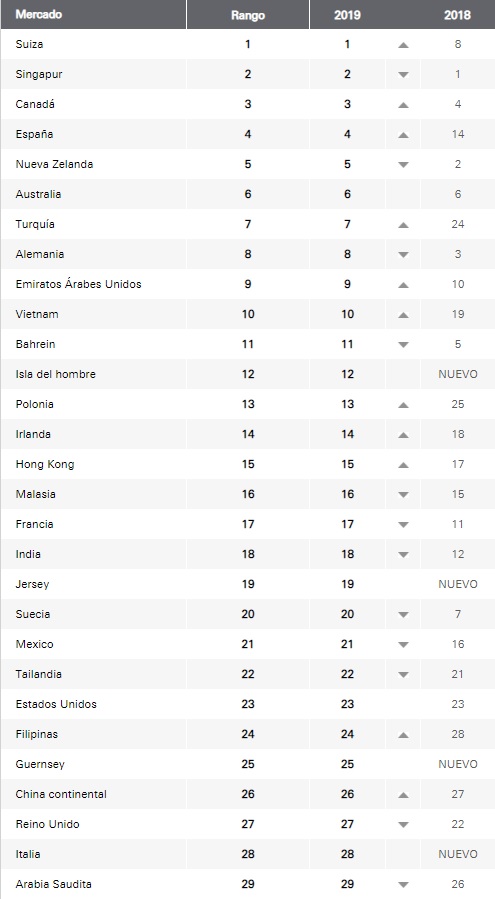
According to a list made by the HSBC Expatriate Financial Services Group, Mexico is among the list of countries that have the best living conditions, including economic, social, and political factors.
Mexico ranks above developed countries such as the United States, Japan, and/or the United Kingdom.
This Ranking takes into account physical and mental well-being, in addition to the quality of life, political aspects, and also the ease of settling in the country for foreigners and, thus, the opening of the country in general.
In the first three places, Switzerland, Singapore, and Canada, according to the 2019 list, in the 2018 list, Switzerland was in eighth place, Singapore was first and Canada number four.
Mexico ranks in 21st place, being above the United States, which is in 23rd place.
China is in 27th place, and Japan is number 30.


Friday, December 6, 2019

On Becoming a Permanent Tourist, a Perpetual Traveler, and a Prior Taxpayer


I have written about alternatives to living in Mexico with the question If not here, Where?

Doug Casey’s Note: I’ve been emphasizing the importance of making the world your oyster for many years. Most people—and this is especially true of North Americans—tend to stay pretty much where they were born. Acting like medieval serfs or even vegetables rooted to where they were planted. Neither is a good strategy for a person. Certainly not today.

You want to broaden your horizons and keep your options open. Like Gert Mulder.

Gert is a former bank director who’s opened offices all over South America, even though he’s Dutch. He’s become a friend I enjoy spending time with when I’m in Punta Del Este. I don’t even hold it against him that he’s an MBA and a Ph.D. in Finance. It adds weight to his recommendation about being a perpetual traveler (PT)...

Even though he’s been in a wheelchair for the last decade from mild muscular dystrophy, he’s very active and has six children.

He’s an example of putting into practice the theory about being an international man. And is surprisingly typical of the type of person you can meet in Punta or in Argentina just across the Plate River.

By Dr. Gert Jan Mulder

It hung up with a European politician with whom I have been friends for many years. He has been extremely successful in a very short period of time and may even run the risk of becoming prime minister at some point, yet he surprises me at regular intervals when he speculates that he may have to emigrate from Europe one day soon.

This reminds me of a meeting I just had yesterday with an Argentine acquaintance. He mentioned a businessman and close friend in Argentina who has been very successful in the brokerage business but feels he’s in a trap because the Argentine Peronists have won the elections and this will undoubtedly bring that country back to a darker period. Argentina is very likely to close down its economy further, heading for yet another default and increasing government regulations. Even before the new president is to assume office, restrictions have been set that individuals cannot buy more than $200 a month in US currency.

A point to make with both the politician and the Argentine businessman—and so many others, actually millions of others—is that they do not make contingency plans. Most people wait until their problems become imminent before making alternative plans of where to live, which second or third passport to have, or what to do with their business, their family, and ultimately their savings. Being a former banker, hundreds of people have asked me in the past what to do with their savings. The more money they had, the bigger their problems became, resulting in sleepless nights and never-ending analysis of their circumstances. My favorite answer has always been to spend it.

The world has not become an easier place in recent decades, and everything points towards this process of accelerating complexity and uncertainties. The urgency to have proper alternatives for each individual becomes more and more apparent. The bad news is that nothing is certain, and disastrous events do occur.

One day I was talking to a very wealthy and very nice, warm person, when he told me, all of a sudden and out of the blue, that I was a "PT". This abbreviation, PT, can mean a lot of things but usually refers to someone who is a perpetual traveler. These people are always on the move and are truly global citizens, no longer belonging to a certain place that most of us call home. Some also use the abbreviation PT to refer to a prior taxpayer.

The advice that people should take to heart in this ever-changing global village is to prepare alternatives: alternative places to reside, alternative places to stock savings, alternative travel documents, alternative places to register one’s business, and alternative places to find a roof over one’s head. Also to be aware of the fact that property, real estate as well as land, cannot be moved from one place to the other. These things can get you stuck.

So, let’s say you find yourself living in the United States or somewhere in Europe, mostly in one of those member states of the EUSSR, where your prospects to a free and happy life are becoming dimmer and dimmer. This brings the question, "If I have to leave, where do I go?"

This is a tough one, which Doug Casey and I answered a long time ago. These decisions are never easy and are always very personal. Doug and I just happened to end up in Uruguay, South America, a little country tucked away between Brazil and Argentina. Doug calls it "a small, relatively insignificant backward socialist country".

And yet it does bring with it an attractive laundry list of positive features: generally speaking and with the exception of a few months of winter, a mild climate; a country that is nearly empty with less than 20 people per square kilometer; a tax system that is based on the territorial principle, meaning that you pay taxes only on income that is generated in Uruguay; relatively stable political, economic, and social conditions; a population that is predominantly of European origin, namely Spanish and Italian; and people that seem to have struck a good balance between work and pleasure, although the latter qualification depends entirely on taste and personal judgment. Some may find them on average to lack ambition and discipline.

For us, libertarians, freedom and especially personal freedom is the highest value we try to achieve, and by doing so I personally fail to see how people can manage their lives, with all the controls and all the limitations in so-called first-world countries. Every sign seems to suggest that people in these countries are about to lose whatever is left of their personal freedom at an alarming rate.

So, if freedom is dear to you, stop hesitating and start thinking about moving out of your first-world country if you can and focusing on the alternatives and advantages of so-called third-world countries. Chances are that you will be able to manage your life, preserving what is most dear to you—personal freedom—by relocating to a place on this planet that is not about to turn into George Orwell’s nightmare, 1984.

And while considering this, please do remember the suggestions on how to become a PT.

Editor's Note: The world is facing a severe crisis on multiple fronts.

Gold is just about the only place to be. Gold tends to do well during periods of turmoil—for both wealth preservation and speculative gains.

That's precisely why legendary speculator Doug Casey’s colleague just released an urgent video.

It reveals how it will all play out, and how you can set yourself up for big profits with a lesser-known way to invest in gold. It's one of Doug's favorite ways to invest in gold. Click here to watch it now.

Photo by Clay Banks on Unsplash

Thursday, September 12, 2019

The Lazaro Cardenas Revolution, Part I

MEXICAN INDEPENDENCE DAY SPECIAL ISSUE

By Daniel Nardini
Lawndale News Chicago's Bilingual Newspaper - CommentaryWhen Mexico became an independent country in 1821, one of two things that had eluded the country for a long time was stability and providing a stake, an outlet for the people in the future of their country. Mexico had stable government during brief periods of its history after independence, and one of the reasons why the Mexican Revolution occurred was due to the fact that the ordinary people did not have any stake, any representation in the government that ruled them. The revolution had produced one important thing, the Constitution of 1917 that at least had provided a blueprint for the rights and a legal framework for how the country should govern itself. This document provided a chance for all future administrations to run the country in a more stable manner.
Like any constitutional process, it takes the will and ability of those people put into office to try and make that constitutional process work. After the Mexican Revolution, former Mexican General Alvaro Obregon had given Mexico social and political stability, but little else. Although president from 1920 to 1924, he pushed a change in the Constitution to give him a second term. Before he could take up a second term he was assassinated by Jose de Leon Toral. Obregon was succeeded by another former Mexican general named Plutarco Elias Calles, who ruled as president from 1924 until for all due purposes 1934. Callas was more a dictator than a president. The most notable thing under his presidency was the founding of the Institutional Revolutionary Party—the institution that would govern Mexico from 1929 until the election of 2000. His handpicked successor was yet another general from the revolution named Lazaro Cardenas.
Cardenas at first seemed more like a puppet for Callas. While Cardenas was the actual president, Callas ruled the country from his “retirement.” However, Cardenas proved to be truly independent of Callas, and made sure that Callas stayed in retirement and no longer interfered in the government after 1935. From there, Cardenas worked hard to improve the condition of the country. He had an extensive road network built, and he constructed more public schools than had ever been done since the end of the Mexican Revolution. He nationalized the oil industry and put it under the government corporation Pemex so that the government had a more reliable source of revenue. Just as important, Cardenas broke up the large land estates that belonged either to the Catholic Church or to the powerful landowners and gave the land to small farmers. He helped encourage the building of labor unions in return for the unions providing workers’ support for his government, and Cardenas also contributed government funds for large-scale industrialization throughout the country. This, in turn, drove unemployment down and helped to build Mexico’s middle class.

The article is from the Lawndale News 

Saturday, September 7, 2019

The Orchid Market


According to Pocket field guide of the most common orchids in Mexico.
Mexico - Orchids | Rainforest Publications (1-888538-15-1) "Orchids are one of the largest families of plants in the world, with about 30.000 species. Mexico has around 1250 species of orchids, with an estimated 40% being endemic. This makes Mexican orchid flora one of the richest in Central and Latin America.

The Orchid Market is here in San Miguel NOW and is being sponsored by the Orchid Growers of San Miguel, a group of people whose love of orchids has brought them together not as a formal club but as a fun, social group with one common denominator: everyone’s personal love of orchids. The Orchid Market will have 20+ vendors from all over México who will be selling orchids, orchid supplies, succulents, and cacti. Admission to the Orchid Market is free.

f you’re looking for answers as to why orchids are so intriguing and why there are more groups dedicated to growing and studying orchids than any other plant variety in the world, you definitely need to come to San Miguel’s fifth Orchid Market on Saturday and Sunday, September 7 and 8, from 10am–5pm on both days, inside the Instituto Allende.


“San Miguel Orchid Market”
Sat–Sun, Sep 7–8, 10am–5pm
Ancha de San Antonio 32
Inside the Instituto, almost to Cardo
Admission free

Saturday, August 31, 2019

Gold in Mexican Pesos


In 2011 Gold in U.S, Dollars hit a high of $1,900. The high gold price in Mexican Pesos was MXN24,000. Here in 2019 gold finally, broke through a ceiling of $1,360 that had been in place for six years. It currently trades at $1,529. 

The gold price in Mexican Pesos has moved to MXN30,499. The MXN peso was 13.50 to the dollar in 2011, and now is 20.06 to the dollar.

Tom Dyson at Bonner & Partners said in a recent email. "but there are 56 countries left on the planet where the gold price is NOT yet at an all-time high. Many of them have pegged currencies to the dollar.

The U.S. is one of those countries. We would need another 23% rise in the price of gold to reach a new high.

What does that mean to me, Mike?

If you are moving to Mexico, it seems logical to convert some of your pesos to gold. We moved here in the first quarter of 2015. Gold was MXN18,000; today at MXN30,499. Converting dollars to Pesos would have given us a big loss.

More about the implications to come.

Friday, August 30, 2019

Marilyn Murray Willison: How to Live Large in International Retirement - Part 2


In my previous column, I introduced “Positive Aging” readers to International Living Magazine and its Annual Global Retirement Index, which evaluates the best places for American retirees to relocate overseas. Last week, we highlighted Columbia, Portugal, Peru, Thailand and Spain.
Do you remember the July 3 column I wrote about Dan Buettner’s book The Blue Zones: Lessons for Living Longer From the People Who’ve Lived the Longest? He had researched and identified specific places on the globe where people tend to enjoy enhanced longevity thanks to diet and lifestyle.
Well, this week, we’re going to take a look at the places International Living considers to be the top five retirement destinations, which actually seem to be clustered near a geographical Blue Zone that is not all that distant from the good old USA.
5: MALAYSIA. There are four UNESCO World Heritage Sites here, along with many stunning islands, beautiful beaches and unspoiled rainforests. The Portuguese were the first Europeans to really discover the country 600 years ago. Then came the Dutch, and then the English. The multicultural flavor makes it a unique place to retire, and the excellent low-cost health care can’t be beat.
4: ECUADOR. This country has been in the magazine’s index for several years. The great weather, the excellent, affordable health care and the availability of affordable real estate all contribute to its high score. Additionally, people over the age of 65 often get discounts on flights that originate in Ecuador, as well as 50 percent off movies, sporting events, public transport and utilities. Plus, if you purchase a property, you have the option of a free landline.
3: MEXICO. Thousands of older Americans have chosen to retire in Mexico during the past few decades, and it is easy to see why. Thanks to the weak peso, expats can live comfortably on about $1,200 a month. There are first-rate hospitals throughout the country, and it’s not hard to find someone who speaks English. Residents over the age of 60 receive an INAPAM card, which offers discounts on everything from groceries to restaurants to both local and airline travel. There is a wide variety of climates and cultural environments from which to choose. And life in Mexico has never been more affordable for Americans.
2: COSTA RICA. This has been a desired retirement spot for Americans for the past three to four decades. As long as you receive at least $1,000 per month from Social Security, disability, pension or some other source, you meet the income requirement for residence. According to the magazine’s Latin American editor, rents start at $400 a month for fully furnished condos or houses in nice areas. The health-care situation is both affordable and highly rated, and the country offers a variety of climates — from mountainous to sunny beaches — to meet your preference.
1: PANAMA. There is a wide variety of nationalities already settled in Panama, so if you move there, you’ll never have to feel like an outsider. As with Ecuador, “pensionados,” or retirees, get discounts on everything from health care to hotels to restaurants to travel. The country has beautiful geography, affordable health care and excellent infrastructure. According to International Living, it offers the most benefits of a Central or South American retirement destination.
— Marilyn Murray Willison is a columnist, motivational speaker and journalist, and author of The Self-Empowered Woman blog and the award-winning memoir One Woman, Four Decades, Eight Wishes. Click here to contact her, or click here to read previous columns. The opinions expressed are her own.

Friday, August 16, 2019

In Defense of the Hard-Shell Taco


In Defense of the Hard-Shell Taco:

Here, however, hard-shelled tacos filled with lettuce, tomato, and shredded cheese has become a standard weeknight meal and — for better and worse — the face of Mexican food in the country.
The history of the dish may surprise some though. While Glen Bell and his Taco Bell franchise often gets credit for its nationwide popularity, the true origins are completely Mexican. Los Angeles Times food writer Gustavo Arellano wrote about the history in his book Taco USA: How Mexican Food Conquered America. The hard-shell dish that inspired Taco Bell’s legacy was originally found at Mitla Cafe, a restaurant in San Bernardino, California. The restaurant was opened in 1937 by Lucia Rodriguez, who crafted the popular taco recipe using available ingredients to make something familiar to the food she grew up within Tepatitlan, Mexico, yet completely new at the same time. Unlike today’s global market, actual Mexican ingredients were difficult to get during this time period, even at border towns. Unable to find things like cilantro and spices, the community adapted using ingredients like lettuce and shredded cheese. The beef taco seems basic, but it was born out of trying to make the best out of the situation at hand. Not inauthentic, but actually completely honest in that it was the best that could be done with what was available to the community at the time.
Glen Bell, who happened to own a hamburger and hot dog stand across the street at the time, walked across the road to eat at Mitla Cafe daily. He became enamored not only by the tacos but also their popularity in the community.
Arellano describes Bell’s fascination in Taco USA:
“[Bell would] return to his stand to sell food, but spend late nights after closing time trying to decipher the rival restaurant’s tacos, so popular that they opened a walk-up window next to the kitchen, so the lines ran faster.”
The technique for creating the iconic U-shaped tortillas at Mitla daily is daunting: fresh corn tortillas are folded into a pan of oil and pressed down gently with a ladle until fried and fully shaped. Bell, eager to find a way to replicate this, not only developed his own recipe but also fastened a wire basket that could fry six U-shaped tortillas at a time. Despite some early successes here and there with Mexican restaurants during the 1950s, it would take over a decade of ups and downs before Bell finally found his stride and launched the first Taco Bell in a Los Angeles suburb. Today the chain has more than 7,000 restaurants worldwide rakes in annual earnings of nearly $11 billion (according to the Orange County Business Journal). Though hard-shell beef tacos are the most well-known, the idea of crispy tacos goes back somewhat further in American history. Tacos dorados, a general term for any kind of fried taco (but typically filled first and fried together) was a popular item among Mexicans in Southern California as far back as the 1910s. (According to Arellano, “When a customer [at Mitla Cafe] asks for a hard-shelled taco with ground beef, the order is repeated in Spanish — taco dorado con carne molida”). 
Taquitos, the rolled up tacos often filled simply with beans or ground meat, is a popular version of the deep fried taco that’s become so common it’s a staple in the frozen goods section of most grocery stores. Other variations of dorados covered in different sauces and toppings span the Southwestern U.S.
Here in Columbia, nothing exemplifies the love of the hard-shell more than the famous Taco Tuesdays at The Whig. The simple pleasure of lettuce, tomato, and cheese over the well-seasoned ground beef or black beans is hard to beat. For years, locals have constantly flocked to the ubiquitous dive bar for cheap, nostalgic tacos. Similar tacos can be found at many places, including taquerias like Moctezuma’s Mexican Restaurant, which quietly serves generously stuffed beef tacos on their lunch and dinner special plates. 
There’s no better display of hard-shell taco evolution though than down Percival Road at Tacos Nayarit. Using a Chipotle-style setup where you pick from traditional Mexican taqueria fillings, Tacos Nayarit lets you choose from the classic corn tortilla, flour tortilla or hard-shell dorados These aren’t premade hard shells from the store either, but rather yellow corn tortillas that they fry in an actual slotted basket built for shaping tortillas into the iconic U-shape. The fry takes less than a couple of minutes, yielding beautiful golden receptacles ready to be filled.
The tacos are then dressed any way you want. Carnitas with grilled onions, lettuce, tomato, and cheese? Marinated chicken with corn relish and guacamole salsa? The options are plentiful and fit perfectly snug in the warm, fresh fried hard shells. There’s something odd at first when you eat one of these at Tacos Nayarit. Unlike The Whig, which just bursts with American nostalgia, this plays with everything you know about a taco. Layers of crispiness, from the hard-shell to the lettuce to the bits of carnita or al pastor, give the food a fresh perspective. Is it traditional? No. But the spirit is still there in the flavors and feeling. And it’s delicious.
Photo:

Vinícius Caricatte