Thursday, May 14, 2020

Moving Abroad: How To Bring All Your Essentials To Your New Home

 2 Google +0  0  1  0

From Reality Biz News
For many, moving abroad to start a new job or a new life can be an exciting time. There are so many new things to look forward to, so much change, and so many adventures await. There are a number of things to attend to such as paperwork, visa applications, money conversion, car shipping, contracts, house rentals, clothes, and appliances that you need to ship out. 


As your to-do list gets longer and the anxiety heightens, the entire event can become overwhelming. As you pack up your things and think about your new home, it is important to understand that you do not need to bring everything. Trying to cram everything into your bags can only result in lots of stress and overweight baggage. 
If you are not quite sure what to take with you and what to leave behind, no worries. This article summarizes the most essential considerations about what to bring when you are moving overseas. Additionally, it also offers helpful guides when looking into real estate abroad.
  1. Essentials for consideration
Before you pack your things, think about the essentials that you should bring. To guide your decisions, use the following criteria:
  • Duration: How long are you sure to stay in the new country? Are you planning to live there permanently? Is this a temporary work arrangement? Or is this a “let’s see where it goes and whether we like it there” kind of move?
  • Restrictions: What are the country’s restrictions on the things that you want to bring? How much will you spend on import taxes, fees, and the like? Every country has its own set of rules; make sure you properly research everything beforehand.
  • Climate: What is the climate in the place where you are going? Are there things that you will no longer need to bring because of the climate there? Will you need to buy climate-appropriate clothes or devices?
  • Facilities: Will you have accommodations ready when you get there? Will you be sharing a space with someone? Will you be provided appliances or do you need to buy or bring your own?
  • Electricals: What is the voltage of electrical outlets used in your destination? What plugs do outlets generally require over there? Are plug adaptors necessary to charge your laptop, desktop, mobile phone, external battery, shaver, and other personal devices? Is it more cost-efficient to bring electrical appliances or to buy them when you get there?
When you have thought about these things, it’s time to start packing your essentials. 
  1. Taking your car abroad
If you are thinking of bringing your car with you, there are some elements that you should look into to ensure a smooth journey. For instance, to make your life easier, consider a car shipping company that offers the following: 
  • Door-to-door delivery
  • Insurance
  • International shipping
  • Open and enclosed trailers
  • Instant online pricing
It is definitely a plus if they offer last-minute car shipments, require no initial deposit, and insurance is included in the total charges. Different car shipping companies offer different price packages. Consider your budget and find one that suits you best. 
  1. Finding a home abroad
It’s not easy to find a home abroad if you’re still currently in another country. However, having your own home will save you costs on hotel accommodations. Some things to help you virtually scout for a house are the following: 
  • First, think about the duration of your stay there. Are you moving in permanently? Or is this a temporary arrangement? 
  • Hire a local lawyer to help you learn what is your rights as a real estate owner in another country. Since there are many things to consider such as titles, deeds, and ownership rights, it is important to get ahead of things by knowing the law. Take also the time to know about the law for expatriates. There are certain things that you might not be able to do or own if you are not a native of the land.
  • If there are certain facilities that you prefer to be close to then you have to take that into consideration when buying a house abroad. Do you need to be near the airport for your travels? Or do you prefer being near the groceries? 
  • Lastly, if you know of other expatriates in the country, it is best to seek real advice from them. Since they’re quite familiar with the country, they will be able to give 
  • much-needed advice to help you start on the right foot. 
Takeaways 
Moving abroad is not easy, but it can be a fun adventure. Remember to pack all your essentials and divide them into your carry-on baggage, your luggage, and the ones that you will ship out via air or land. The key points summarized in this article should help you get started on your way towards better decisions about moving your stuff overseas, and if you decide to stay, on finding the best real-estate options for your new home.

Sunday, April 19, 2020

Selling Rental Property That Was Your Primary Residence


Selling rental property that was your primary residence is a common problem for ex-pats. For example, you own a house in Omaha but have decided to move to San Miguel de Allende, Mexico. When you get to Mexico, you fall in love with the city, the culture, the people, the food, and the weather. Compared to Omaha, the winter never gets much below freezing, and the summer never gets much above 90 degrees. You find that the cost of living is about a third of the U.S., resulting in a decision to live permanently in San Miguel and rent out the once primary residence in Omaha.
Selling Rental Property That Was Your Primary Residence
Now, at some point in the next five years, you face a dilemma. Before the conversion to a rental, if you lived in the house for two of the last five years and sold the house for a capital gain, you would exclude $250,000 each of the profit of $500,000. When you convert from a primary residence to a rental, the clock starts over. You can offset the rental income with depreciation, but you will lose the ability to shelter the capital gains if you do not use the house for your primary residence two years of the next five.

According to KLR, Kahn, Litwin, Renza & Co, When you convert the property, you are eligible to depreciate the tax basis of the building portion (not the land) over 27.5 years. Depreciation is a great way to offset rental income without actually expending any additional cash.

KLR says, “It is important to discuss your options with your tax advisor. The more facts and accurate timeline you can provide, the more options you will have when weighing your decision. This is certainly a situation where you don’t want to let the tax tail wag the dog, but if you make one or two small changes to the circumstances, you could net significant tax savings.
Selling Rental Property That Was Your Primary Residence
In my experience, I’ve seen another example of selling rental property that was your primary residence. A couple I knew would buy a house to flip. They would use the house as their primary residence while they updated the house. They needed to live there for at least two years. Then they would find another fixer-upper, move in and rent the first house. Essentially, they lived in each house rent-free.
Ain’t real estate grand?

FREE information on How to sell your house fast


Saturday, December 7, 2019

Best Places to Live


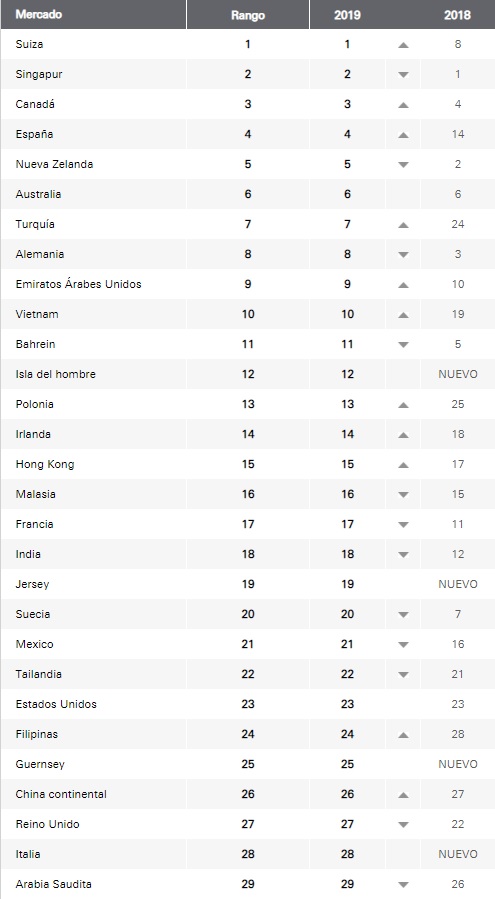
According to a list made by the HSBC Expatriate Financial Services Group, Mexico is among the list of countries that have the best living conditions, including economic, social, and political factors.
Mexico ranks above developed countries such as the United States, Japan, and/or the United Kingdom.
This Ranking takes into account physical and mental well-being, in addition to the quality of life, political aspects, and also the ease of settling in the country for foreigners and, thus, the opening of the country in general.
In the first three places, Switzerland, Singapore, and Canada, according to the 2019 list, in the 2018 list, Switzerland was in eighth place, Singapore was first and Canada number four.
Mexico ranks in 21st place, being above the United States, which is in 23rd place.
China is in 27th place, and Japan is number 30.


Friday, December 6, 2019

On Becoming a Permanent Tourist, a Perpetual Traveler, and a Prior Taxpayer


I have written about alternatives to living in Mexico with the question If not here, Where?

Doug Casey’s Note: I’ve been emphasizing the importance of making the world your oyster for many years. Most people—and this is especially true of North Americans—tend to stay pretty much where they were born. Acting like medieval serfs or even vegetables rooted to where they were planted. Neither is a good strategy for a person. Certainly not today.

You want to broaden your horizons and keep your options open. Like Gert Mulder.

Gert is a former bank director who’s opened offices all over South America, even though he’s Dutch. He’s become a friend I enjoy spending time with when I’m in Punta Del Este. I don’t even hold it against him that he’s an MBA and a Ph.D. in Finance. It adds weight to his recommendation about being a perpetual traveler (PT)...

Even though he’s been in a wheelchair for the last decade from mild muscular dystrophy, he’s very active and has six children.

He’s an example of putting into practice the theory about being an international man. And is surprisingly typical of the type of person you can meet in Punta or in Argentina just across the Plate River.

By Dr. Gert Jan Mulder

It hung up with a European politician with whom I have been friends for many years. He has been extremely successful in a very short period of time and may even run the risk of becoming prime minister at some point, yet he surprises me at regular intervals when he speculates that he may have to emigrate from Europe one day soon.

This reminds me of a meeting I just had yesterday with an Argentine acquaintance. He mentioned a businessman and close friend in Argentina who has been very successful in the brokerage business but feels he’s in a trap because the Argentine Peronists have won the elections and this will undoubtedly bring that country back to a darker period. Argentina is very likely to close down its economy further, heading for yet another default and increasing government regulations. Even before the new president is to assume office, restrictions have been set that individuals cannot buy more than $200 a month in US currency.

A point to make with both the politician and the Argentine businessman—and so many others, actually millions of others—is that they do not make contingency plans. Most people wait until their problems become imminent before making alternative plans of where to live, which second or third passport to have, or what to do with their business, their family, and ultimately their savings. Being a former banker, hundreds of people have asked me in the past what to do with their savings. The more money they had, the bigger their problems became, resulting in sleepless nights and never-ending analysis of their circumstances. My favorite answer has always been to spend it.

The world has not become an easier place in recent decades, and everything points towards this process of accelerating complexity and uncertainties. The urgency to have proper alternatives for each individual becomes more and more apparent. The bad news is that nothing is certain, and disastrous events do occur.

One day I was talking to a very wealthy and very nice, warm person, when he told me, all of a sudden and out of the blue, that I was a "PT". This abbreviation, PT, can mean a lot of things but usually refers to someone who is a perpetual traveler. These people are always on the move and are truly global citizens, no longer belonging to a certain place that most of us call home. Some also use the abbreviation PT to refer to a prior taxpayer.

The advice that people should take to heart in this ever-changing global village is to prepare alternatives: alternative places to reside, alternative places to stock savings, alternative travel documents, alternative places to register one’s business, and alternative places to find a roof over one’s head. Also to be aware of the fact that property, real estate as well as land, cannot be moved from one place to the other. These things can get you stuck.

So, let’s say you find yourself living in the United States or somewhere in Europe, mostly in one of those member states of the EUSSR, where your prospects to a free and happy life are becoming dimmer and dimmer. This brings the question, "If I have to leave, where do I go?"

This is a tough one, which Doug Casey and I answered a long time ago. These decisions are never easy and are always very personal. Doug and I just happened to end up in Uruguay, South America, a little country tucked away between Brazil and Argentina. Doug calls it "a small, relatively insignificant backward socialist country".

And yet it does bring with it an attractive laundry list of positive features: generally speaking and with the exception of a few months of winter, a mild climate; a country that is nearly empty with less than 20 people per square kilometer; a tax system that is based on the territorial principle, meaning that you pay taxes only on income that is generated in Uruguay; relatively stable political, economic, and social conditions; a population that is predominantly of European origin, namely Spanish and Italian; and people that seem to have struck a good balance between work and pleasure, although the latter qualification depends entirely on taste and personal judgment. Some may find them on average to lack ambition and discipline.

For us, libertarians, freedom and especially personal freedom is the highest value we try to achieve, and by doing so I personally fail to see how people can manage their lives, with all the controls and all the limitations in so-called first-world countries. Every sign seems to suggest that people in these countries are about to lose whatever is left of their personal freedom at an alarming rate.

So, if freedom is dear to you, stop hesitating and start thinking about moving out of your first-world country if you can and focusing on the alternatives and advantages of so-called third-world countries. Chances are that you will be able to manage your life, preserving what is most dear to you—personal freedom—by relocating to a place on this planet that is not about to turn into George Orwell’s nightmare, 1984.

And while considering this, please do remember the suggestions on how to become a PT.

Editor's Note: The world is facing a severe crisis on multiple fronts.

Gold is just about the only place to be. Gold tends to do well during periods of turmoil—for both wealth preservation and speculative gains.

That's precisely why legendary speculator Doug Casey’s colleague just released an urgent video.

It reveals how it will all play out, and how you can set yourself up for big profits with a lesser-known way to invest in gold. It's one of Doug's favorite ways to invest in gold. Click here to watch it now.

Photo by Clay Banks on Unsplash

Thursday, September 12, 2019

The Lazaro Cardenas Revolution, Part I

MEXICAN INDEPENDENCE DAY SPECIAL ISSUE

By Daniel Nardini
Lawndale News Chicago's Bilingual Newspaper - CommentaryWhen Mexico became an independent country in 1821, one of two things that had eluded the country for a long time was stability and providing a stake, an outlet for the people in the future of their country. Mexico had stable government during brief periods of its history after independence, and one of the reasons why the Mexican Revolution occurred was due to the fact that the ordinary people did not have any stake, any representation in the government that ruled them. The revolution had produced one important thing, the Constitution of 1917 that at least had provided a blueprint for the rights and a legal framework for how the country should govern itself. This document provided a chance for all future administrations to run the country in a more stable manner.
Like any constitutional process, it takes the will and ability of those people put into office to try and make that constitutional process work. After the Mexican Revolution, former Mexican General Alvaro Obregon had given Mexico social and political stability, but little else. Although president from 1920 to 1924, he pushed a change in the Constitution to give him a second term. Before he could take up a second term he was assassinated by Jose de Leon Toral. Obregon was succeeded by another former Mexican general named Plutarco Elias Calles, who ruled as president from 1924 until for all due purposes 1934. Callas was more a dictator than a president. The most notable thing under his presidency was the founding of the Institutional Revolutionary Party—the institution that would govern Mexico from 1929 until the election of 2000. His handpicked successor was yet another general from the revolution named Lazaro Cardenas.
Cardenas at first seemed more like a puppet for Callas. While Cardenas was the actual president, Callas ruled the country from his “retirement.” However, Cardenas proved to be truly independent of Callas, and made sure that Callas stayed in retirement and no longer interfered in the government after 1935. From there, Cardenas worked hard to improve the condition of the country. He had an extensive road network built, and he constructed more public schools than had ever been done since the end of the Mexican Revolution. He nationalized the oil industry and put it under the government corporation Pemex so that the government had a more reliable source of revenue. Just as important, Cardenas broke up the large land estates that belonged either to the Catholic Church or to the powerful landowners and gave the land to small farmers. He helped encourage the building of labor unions in return for the unions providing workers’ support for his government, and Cardenas also contributed government funds for large-scale industrialization throughout the country. This, in turn, drove unemployment down and helped to build Mexico’s middle class.

The article is from the Lawndale News 

Saturday, September 7, 2019

The Orchid Market


According to Pocket field guide of the most common orchids in Mexico.
Mexico - Orchids | Rainforest Publications (1-888538-15-1) "Orchids are one of the largest families of plants in the world, with about 30.000 species. Mexico has around 1250 species of orchids, with an estimated 40% being endemic. This makes Mexican orchid flora one of the richest in Central and Latin America.

The Orchid Market is here in San Miguel NOW and is being sponsored by the Orchid Growers of San Miguel, a group of people whose love of orchids has brought them together not as a formal club but as a fun, social group with one common denominator: everyone’s personal love of orchids. The Orchid Market will have 20+ vendors from all over México who will be selling orchids, orchid supplies, succulents, and cacti. Admission to the Orchid Market is free.

f you’re looking for answers as to why orchids are so intriguing and why there are more groups dedicated to growing and studying orchids than any other plant variety in the world, you definitely need to come to San Miguel’s fifth Orchid Market on Saturday and Sunday, September 7 and 8, from 10am–5pm on both days, inside the Instituto Allende.


“San Miguel Orchid Market”
Sat–Sun, Sep 7–8, 10am–5pm
Ancha de San Antonio 32
Inside the Instituto, almost to Cardo
Admission free