
Saturday, September 27, 2014

AARP: Best Places to Retire Abroad - Mexico
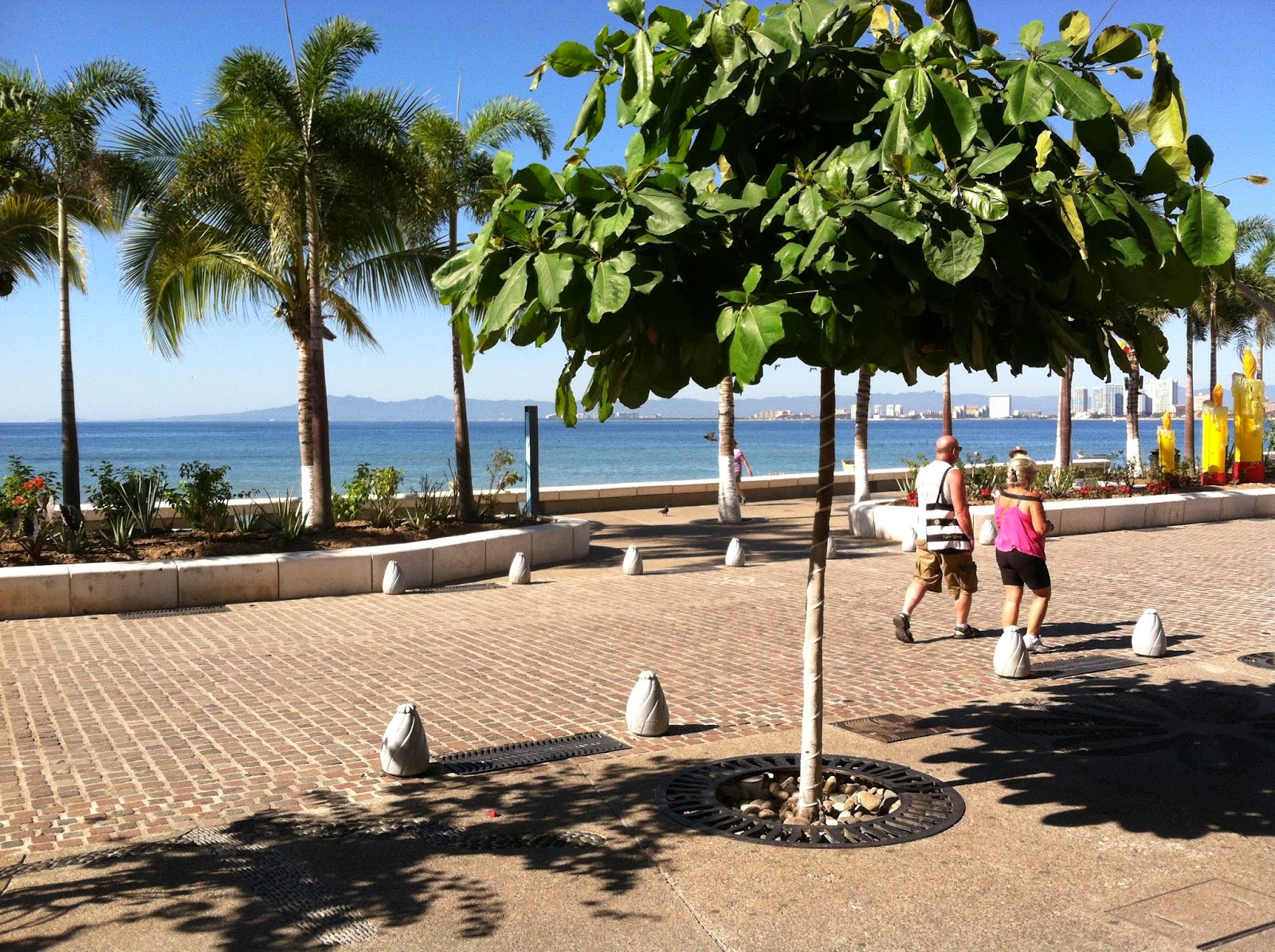
With its profoundly rich Indian and Spanish culture, its spectacular beaches and charming colonial hill towns, its real estate bargains and its proximity to the United States, Mexico is the undisputed number one destination for American retirees. It boasts thriving expat communities in Lake Chapala, near Guadalajara; San Miguel de Allende, in Guanajuato; Baja California; and Cancún, in the Yucatan. They all have their attractions, including a low-cost, laid-back lifestyle, but our choice in Mexico is the Puerto Vallarta region, located on the Pacific Coast in the state of Nayarit. Its combination of first-class urban amenities and charming palm-fringed villages have made it an appealing retiree draw as well as a popular tourist destination, without the serious crime that blights some other parts of the country.

(A quick word about crime and safety in Mexico: Yes, it's extremely dangerous in the cities bordering the United States and a few places elsewhere. Mexico, however, is also nearly three times the size of Texas, and most of the country is reasonably safe and secure, especially resort areas and tourist destinations.)
Puerto Vallarta's handsome beachfront promenade can be overcrowded with tourists, but venture a few blocks back from the bars and curio shops, and the town's Mexican charms are on display—whitewashed houses bedecked with flowers, and plazas where locals and expats alike greet, eat, and seat themselves on benches to watch the passing parade. In Nuevo Vallarta, the newer luxury area, you’ll find U.S.-style condo complexes and even a mall. You’d think you're back in the States, but at a steep discount.
Forty minutes north of PV, the seaside village of Sayulita is a lively place, with a colorful mix of tourists, retirees, and surfer dudes that keeps things hopping. Rollie Dick, 70, and his wife, Jeanne, 65, both former teachers from California, own and operate the town’s most popular restaurant—Rollie’s—known for its delicious quesadillas and a chef who dances his guests around the tables. "We love the plaza life," Dick says. "It reminds me of the States in the ’50s."
The one thing expats most appreciate about life here: the traditional Mexican friendliness. Peter Glass, 65, a former Procter & Gamble executive, lives with his wife, Charlotte, in a charming small house in Sayulita. An African American from Washington, D.C., he says that "Mexico is the only country I’ve experienced where I haven’t felt that I was being judged one way or the other by the color of my skin. It is a breath of the proverbial fresh air."
Check out our traveler's guide to Puerto Vallarta.
Thursday, September 25, 2014
Auto manufacturers move to Mexico
 |
| Mexico has become a superpower in cars |
Automotive News estimates that just-opened and newly announced plants in Mexico from 2014 will add more than 1.5 million units of vehicle capacity there through 2019, much of it aimed at U.S. consumers. That will give Mexico the factory muscle to turn out 4.5 million cars and trucks -- roughly a 50 percent increase over the 2,934,049 units built in Mexico in 2013.
The investment in Mexico likely will turn up the competitive heat on automakers who are not moving small vehicles into Mexico -- notably General Motors, which produces its subcompact Chevrolet Sonic in Orion Township, Mich., and its compact Chevrolet Cruze in Lordstown, Ohio.
There are many factors that makes Mexico so attractive to automotive manufacturers. There are the EPA laws, OSHA laws, EEOC laws, legal liability laws and municipal zoning laws that make the US less attractive. Mexico also has much lower electricity and natural gas costs that the manufacturing plants consume in enormous quantities.
Wake up America and get your foot off the necks of manufacturers and you will see U.S. manufacturing flourish.
President Enrique Peña Nieto of Mexico

Credit Jason Szenes/European Pressphoto Agency
President Enrique Peña
Nieto of Mexico is expected to promote a series of steps to modernize
and remake the Mexican economy and raise the standard of living when he
addresses the United Nations General Assembly on Wednesday morning.
He has won approval to
let foreign companies and investors hold a stake in Mexico’s national
oil company, raising the prospect to vastly increase slackening
production. He has rewritten the telecommunications law with a goal to
break up the near monopoly of a few private telephone and television
companies. And he has undertaken changes in the education system to
lessen the grip unions hold in schools, and to improve education in
Mexico, where students are far behind those in countries of similar size
and levels of development. But Mr. Peña Nieto remains more popular
abroad than at home, as polls show sinking approval numbers and growing
impatience with the much-promoted reforms that have yet to meaningfully
raise wages or the standard of living of ordinary Mexicans.
All worthy goals in my mind.
Tuesday, September 23, 2014
Saturday, September 6, 2014
La Cuenta, Por Favor
The difference between factura, cuenta and recibo from...in Focus monthly newsletter
 We thought this was an excellent explanation of the difference between factura, cuenta and recibo. Hope it helps you also.
Factura (invoice) is the proof of payment with tariff schedule; this is used among companies to know what they spent and taxes they payed.
Example: If Coca-Cola buys a truck, it requires the invoice to prove ownership and payment of government taxes.
Other example: When companies send you out of town, you are required to ask for the invoice to prove the expenses you made with the company's budget.
Cuenta (bill) is also a proof of payment, but is more related to a restaurant environment.
Example: if you go to a restaurant, you ask for the bill to know how much you'll pay as a total, NOT how much tax is charged.
Recibo (receipt) is also a proof of payment, but, in this case, it is usually used by small businesses when you make a purchase.
Example: When you buy something in GAP, ZARA, Bath and Body works, Steren, etc
Source: wordreference. com
We thought this was an excellent explanation of the difference between factura, cuenta and recibo. Hope it helps you also.Factura (invoice) is the proof of payment with tariff schedule; this is used among companies to know what they spent and taxes they payed.
Example: If Coca-Cola buys a truck, it requires the invoice to prove ownership and payment of government taxes.
Other example: When companies send you out of town, you are required to ask for the invoice to prove the expenses you made with the company's budget.
Cuenta (bill) is also a proof of payment, but is more related to a restaurant environment.
Example: if you go to a restaurant, you ask for the bill to know how much you'll pay as a total, NOT how much tax is charged.
Recibo (receipt) is also a proof of payment, but, in this case, it is usually used by small businesses when you make a purchase.
Example: When you buy something in GAP, ZARA, Bath and Body works, Steren, etc
Source: wordreference. com
Tuesday, September 2, 2014
Ex-pats Living in Baja
\
Video by Horacio Jones
"Last week I had to travel to Rosarito for a video gig, so I took the opportunity to pay a visit to a couple of friends who had moved to Baja a few of years ago. I decided it would also be a good idea to do some kind of story about ex-pats living in Baja while I was there. So I paid Shari and Fernando a visit to see what it was like for them now that they live along the Baja coast.
"During the trip we also met another Shari and an artist named Gretchen who has opened up a place called Art House Rosarito, where she lives, creates art and plans for sustainable communities. She also opens up her home to other artists to stay and work at.
"In this report they discuss what it’s like to live in baja, as well as the differences between the U.S. and Mexico. This is an expansive subject and you could certainly make a feature documentary about it, and I hope in the future to be able to make a more comprehensive report on the subject. Who knows, maybe I’ll even make the move…"
Subscribe to:
Posts (Atom)